When docked side-by-side in a 1:1 titanic vs modern cruise ship size comparison, the 1912 RMS Titanic looks almost like an escort yacht beside today's Icon of the Seas: Titanic measured 269.06 meters (882 ft 9 in) long, 28.19 meters (92 ft 6 in) wide, and 46,328 GRT, whereas an Icon-class modern cruise ship stretches 364.75 meters (1,196.7 ft) long, up to 65.0 meters (213 ft) wide across its bridge wings, and encloses 248,663 GT across 20 decks—making the modern cruise liner 35.6% longer and 5.37 times larger in interior volume!
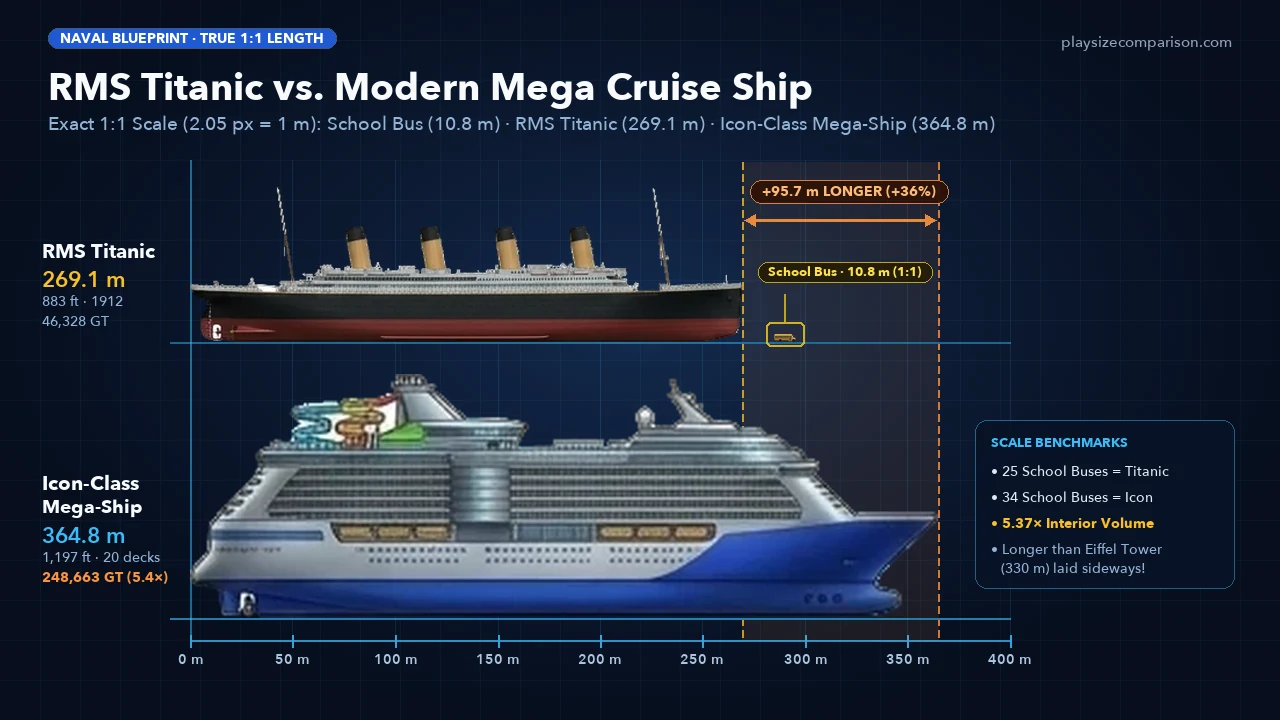
Every naval dimension below is verified against Harland & Wolff builder certificates archived at Royal Museums Greenwich, the DNV Vessel Register (Icon of the Seas, IMO 9829930), and the U.S. Naval Vessel Register (USS Gerald R. Ford CVN-78). Click any Launch 1:1 in 3D link to inspect both hulls side-by-side in Vehicle Size Comparison Game!
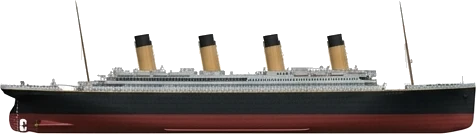 RMS Titanic (1912)269.1 m · 46,328 GRT
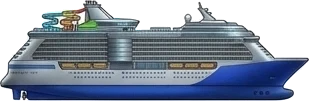 Icon-Class Cruise Ship364.8 m · 248,663 GT
To compare Titanic with a submarine, carrier or container ship, open the five-vessel Ship Size Comparison.
Verified Maritime Table: Titanic vs. Cruise Ship, Supercarrier & Container Giant
| Vessel Name & Class | Overall Length (LOA) |
Max Beam (Width) | Enclosed Volume (GRT / GT) |
Max People Aboard | Live 1:1 3D Viewer |
|---|---|---|---|---|---|
| Typhoon-Class Submarine (Project 941) | 175.0 m (574 ft) |
23.3 m |
48,000 t (submerged disp.) |
160 crew |
Submarine vs. Titanic ↗ |
LZ 129 Hindenburg Airship (1936) |
245.0 m (803.8 ft) |
41.2 m (diameter) |
200,000 m³ gas cells |
130 total |
Hindenburg vs. Titanic ↗ |
RMS Titanic (1912 Olympic-Class) |
269.06 m (882.8 ft) |
28.19 m (92.5 ft) |
46,328 GRT (52,310 t disp.) |
3,327 max (2,224 on maiden) |
Titanic vs. Cruise Ship ↗ |
USS Gerald R. Ford (CVN-78 Carrier) |
337.0 m (1,106 ft) |
78.0 m (flight deck) |
~100,000 long tons disp. |
~4,550 air wing & crew |
Carrier vs. Cruise Ship ↗ |
Icon of the Seas (2024 Icon-Class) |
364.75 m (1,196.7 ft) |
48.5 m waterline (65 m max) |
248,663 GT (20 decks) |
9,950 (7,600 guests + 2,350 crew) |
Titanic vs. Icon-Class ↗ |
| 24,000-TEU Container Ship (Ever Alot Class) | 399.9 m (1,312 ft) |
61.5 m (24 containers wide) |
236,228 GT (241,000 DWT) |
22–26 automated crew! |
Titanic vs. Container Ship ↗ |
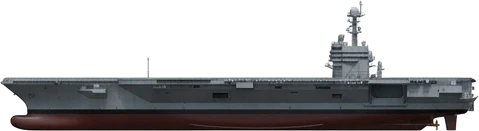 USS Gerald R. Ford337.0 m (1,106 ft)Icon-Class Cruise Ship364.8 m (1,197 ft)RMS Titanic269.1 m hull
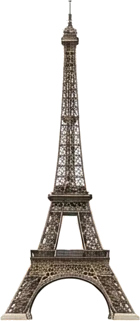 Eiffel Tower330.0 m antenna
Ocean Liner vs. Floating Resort: Why Shapes Changed So Radically
Looking at #compare=rms-titanic,cruise-megaship in 3D immediately reveals why modern cruise ships tower 18 stories above the waves while drawing barely 9.3 meters (30.5 ft) underwater—actually shallower than Titanic's 10.54-meter (34 ft 7 in) draft!
- North Atlantic Express Liner vs. Tropical Balcony Hotel: Built before transatlantic airliners, RMS Titanic was a knife-bowed transatlantic point-to-point express liner engineered to slice
12-meterwinter North Atlantic swells at21–24 knots, packing29coal-fired boilers and4funnels (53.3 mkeel-to-funnel-top) deep inside a narrow28.2 mhull. Modern cruise ships maximize ocean-view balcony cabins in calm Caribbean and Mediterranean waters by widening the hull to48.5 metersfor metacentric buoyancy stability, stacking lightweight aluminum-and-high-tensile-steel superstructures20decks high! - Azipod Thrusters vs. Rudder Turning Radius: Titanic's
30.7-meter-long stern rudder required more than1,100 metersto complete a hard turn at cruising speed. Icon-class ships omit conventional shaft-and-rudder steering altogether: three20-megawattABB Azipod electric thrusters rotate360 degreesbeneath the stern alongside four5.5 MWbow thrusters, letting a365-meterfloating city spin sideways into Caribbean piers without tugboats! - Stood Vertically Against Skyscrapers: Tip RMS Titanic (
269.1 m) onto its stern and it stops61 metersshort of the Eiffel Tower (330.0 m) (compare in 3D ↗); tip an Icon-class cruise ship (364.8 m) or24,000-TEUcontainer ship (399.9 m) upright and both surpass the Eiffel Tower, stopping just below the Empire State Building's443.2 mlightning rod!
Sources & Primary References
- Royal Museums Greenwich — RMS Titanic Facts & Dimensions
- DNV Vessel Register — Icon of the Seas (IMO 9829930) Classification Record
- U.S. Naval Vessel Register — USS Gerald R. Ford (CVN-78) Official Ship Data
- Council on Tall Buildings and Urban Habitat (CTBUH) — Empire State Building Height Benchmark