Animal Size Comparison Game places 44 living creatures, Ice Age megafauna, and Mesozoic dinosaurs side by side on a calibrated 3D natural-history showroom floor. Instead of guessing abstract trivia numbers, you physically drag photorealistic 3D animals—from a 1.5-centimeter Western honeybee up to a 35.0-meter Argentinosaurus—until their silhouettes match published museum and marine-biology specimen records.
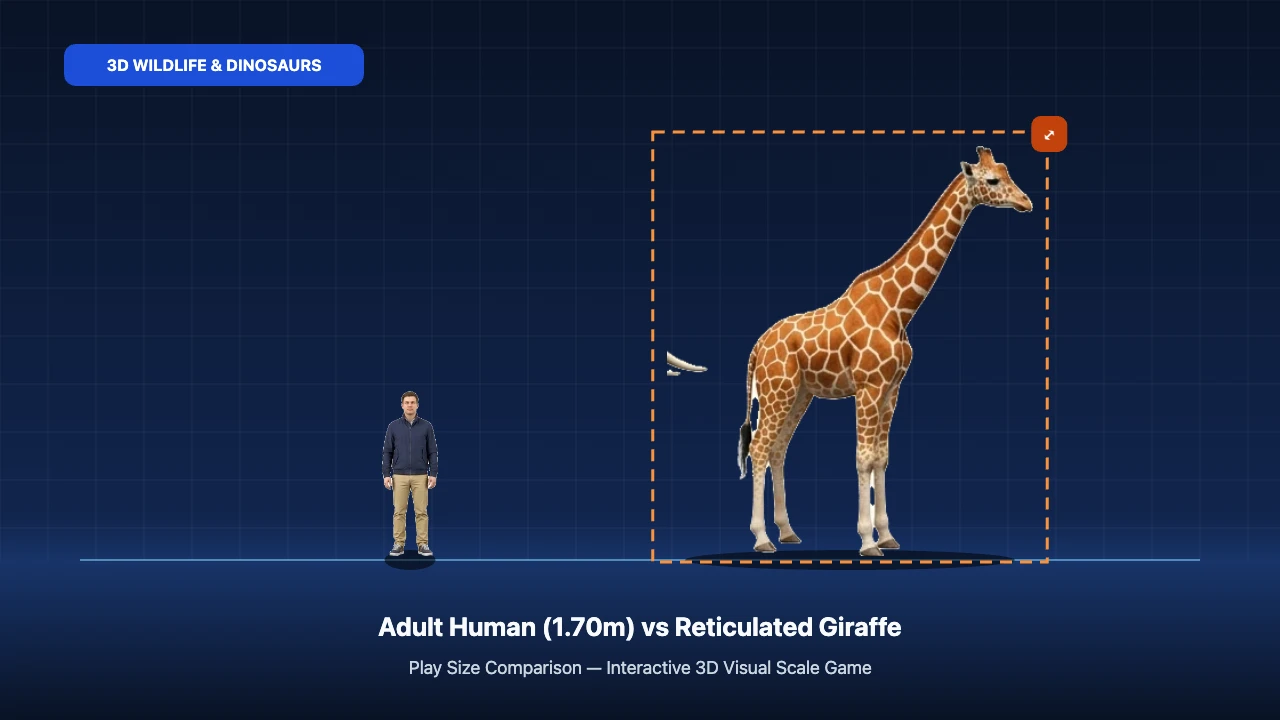
Wildlife photography and monster cinema constantly distort biological scale. Macro lenses make a 20-centimeter Emperor scorpion fill an entire monitor, telephoto safari shots flatten the towering 2.30-meter antler crown of an Alaskan bull moose, and open-water camera angles disguise the fact that a 29.9-meter Antarctic blue whale stretches longer than an NBA basketball court. Scaling species side by side in Animal Size Comparison Game builds rock-solid zoological intuition.
Five Biological Scale Bands Across 44 3D Species
- Insects, Arachnids & Tiny Flyers (1.5 cm to 28.0 cm): Calibrate macro life across the Western Honeybee (1.5 cm), Ruby-Throated Hummingbird (8.5 cm), Monarch Butterfly (10.2 cm wingspan), Adult Emperor Scorpion (20.0 cm pincer-to-tail), and Goliath Birdeater Tarantula (28.0 cm legspan).
- Medium Mammals, Birds & Tortoises (46 cm to 1.80 m): Compare the Domestic Tabby Cat (46 cm head-and-body), Emperor Penguin (1.15 m standing), Seated Giant Panda (1.22 m), Adult Capybara (1.25 m), Greater Flamingo (1.45 m), Galápagos Giant Tortoise (1.50 m), Northwestern Gray Wolf (1.65 m nose-to-tail), Silverback Gorilla (1.65 m standing), and Male Australian Red Kangaroo (1.80 m).
- Apex Predators, Winged Gliders & Herbivores (2.07 m to 4.20 m): Test Velociraptor mongoliensis (2.07 m), Smilodon Saber-Toothed Cat (2.10 m), Bald Eagle (2.15 m wingspan), Alaskan Bull Moose (2.30 m), Common Ostrich (2.50 m), Male African Lion (2.70 m), Upright Polar Bear (2.85 m), Royal Bengal Tiger (2.90 m), Komodo Dragon (3.00 m), Pacific Walrus (3.20 m), African Bush Elephant (3.30 m shoulder height), Wandering Albatross (3.35 m wingspan), Ice Age Woolly Mammoth (3.40 m crown height), Southern White Rhinoceros (4.00 m), and Nile Hippopotamus (4.20 m).
- Tall Browsers, Armored Dinosaurs & Sharks (4.90 m to 12.3 m): Scale the Great White Shark (4.90 m), Saltwater Crocodile (5.20 m), Reticulated Giraffe (5.50 m), Ankylosaurus (8.00 m), Male Orca Killer Whale (8.00 m), Triceratops (9.00 m), Stegosaurus (9.00 m), and Tyrannosaurus rex ('Sue', 12.3 m).
- Prehistoric & Deep-Ocean Giants (13.0 m to 35.0 m): Match Brachiosaurus (13.0 m tall), Giant Squid (13.0 m with feeding tentacles), Spinosaurus (15.0 m), Otodus megalodon (16.0 m), Bull Sperm Whale (16.0 m), Antarctic Blue Whale (29.9 m), and Argentinosaurus (35.0 m).
Verified Zoological & Paleontological Comparisons
| Species | Anatomical Axis | Verified Record | Surprising Real-World Equivalent |
|---|---|---|---|
| Goliath Birdeater Tarantula | Outstretched legspan | 28.0 cm (11.0 in) | Nearly as wide as a 12-inch vinyl LP record (30.5 cm) |
| Emperor Penguin | Standing height | 1.15 m (3 ft 9 in) | Taller than a dreadnought acoustic guitar (1.04 m) |
| Male Red Kangaroo | Standing height | 1.80 m (5 ft 11 in) | Taller than an average adult human (1.70 m) and kitchen fridge |
| Wandering Albatross | Tip-to-tip wingspan | 3.35 m (11 ft 0 in) | Virtually matches an African elephant's shoulder height (3.30 m) |
| Male Orca (Killer Whale) | Snout-to-fluke length | 8.00 m (26 ft 3 in) | Identical in length to armored Ankylosaurus (8.00 m) |
| Spinosaurus aegyptiacus | Snout-to-tail length | 15.0 m (49 ft 3 in) | 2.7 meters longer than Tyrannosaurus rex (12.3 m) |
| Bull Sperm Whale | Snout-to-fluke length | 16.0 m (52 ft 6 in) | Tied with upper peer-reviewed Megalodon estimates (16.0 m) |
Mastering Vertical vs. Horizontal Anatomical Axes
Every 3D creature render in our studio library is tight-cropped in 0-degree orthographic view so camera perspective never inflates snouts, horns, or wingtips:
- Vertical Crown & Shoulder Measurements: Bipedal birds (Penguin, Flamingo, Ostrich), upright mammals (Seated Panda, Gorilla, Kangaroo, Upright Polar Bear), and high-browsing megafauna (Moose, Elephant, Mammoth, Giraffe, Brachiosaurus) scale along the vertical witness bar.
- Horizontal Snout-to-Tail & Fluke Spans: Quadruped predators, ceratopsians, theropods, crocodilians, sharks, whales, and giant squid scale horizontally along the graduated floor ruler.
- Outstretched Wingspans & Arthropods: Flying birds/butterflies (Monarch, Bald Eagle, Wandering Albatross) and top-down arthropods (Goliath Tarantula) scale horizontally tip-to-tip; note that the top-down Emperor Scorpion aligns vertically from front pincers to stinger tail (20.0 cm).
- Prehistoric vs. Living Weight & Posture Nuances: Modern paleontology mounts theropods like Tyrannosaurus rex and Spinosaurus with level horizontal spines balanced across the hips rather than upright kangaroo postures, whereas high-browsing sauropods like Brachiosaurus elevate their skulls up to 13 meters above ground. Toggle 🔥 Blind Eye in the top bar whenever you want to calibrate pure 3D creature anatomy without live meter or foot numbers on screen.
Dive deeper into specimen science in our Dinosaur Fossil Size Guide, Moose Size Comparison, and Blue Whale Size Comparison, or switch to Country Size Comparison Game, Planet Size Comparison Game, Size Comparison Game Unlimited, and today's Size Comparison Game Daily 5.
Be the first calibrator to post today's score or suggest a new comparison object.