In a verified olympus mons vs mount everest size comparison, Mars's giant shield volcano Olympus Mons rises 21,287 meters (69,841 ft) above the Martian global datum—and ~21.9 kilometers (72,000 ft) above its adjacent Amazonis Planitia plains—making it 2.48 times taller than Mount Everest's 8,848.86 meters (29,031.7 ft) above Earth's mean sea level, and 2.15 times taller than Hawaii's Mauna Kea (10,205 m) measured from the deep Pacific Ocean floor!
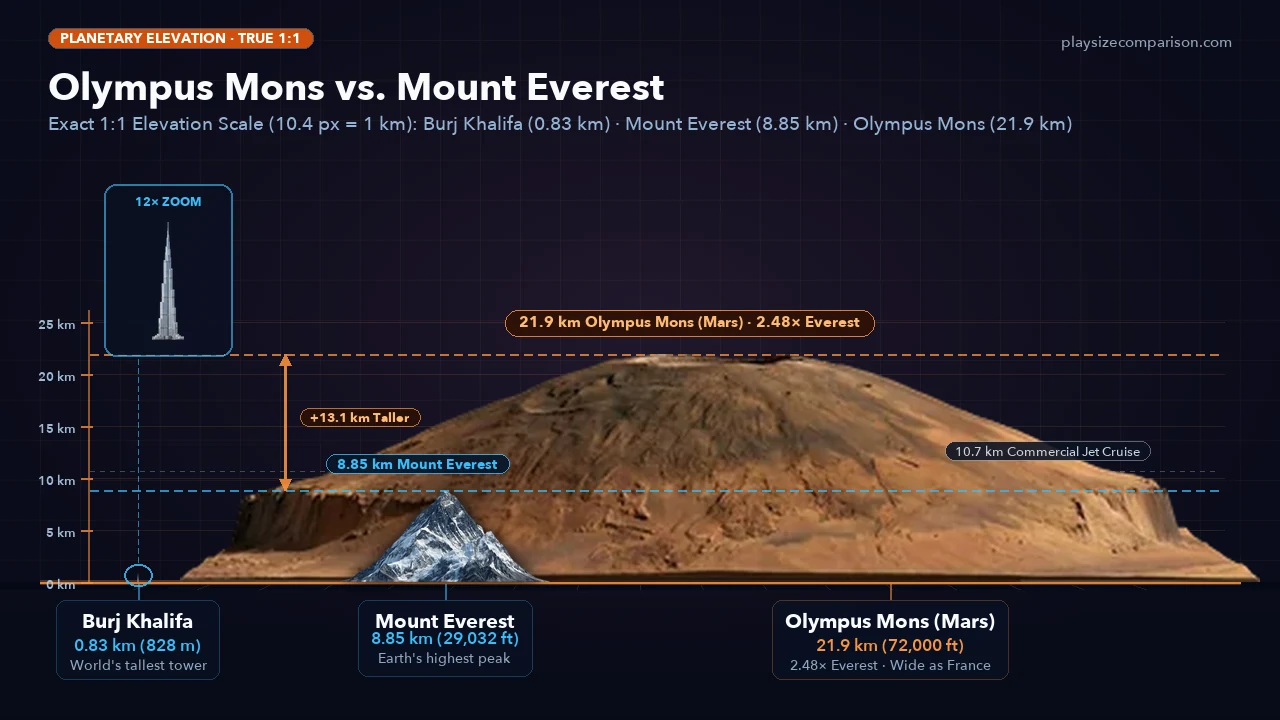
Every elevation and footprint figure below is anchored to the NASA Mars Global Surveyor MOLA Laser Altimeter dataset (NASA Science Mars Facts), the December 2020 Joint China–Nepal GNSS/Geoid Survey of Mount Everest, and the U.S. Geological Survey Hawaiian Volcano Observatory.
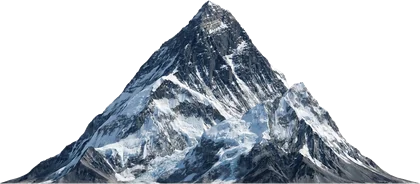 Mount Everest8,849 m (29,032 ft)
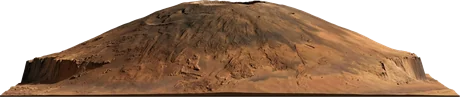 Olympus Mons (Mars)21,900 m (71,900 ft)
Verified Elevation & Footprint Table: Earth Peaks vs. Solar System Giants
| Peak or Structure | Vertical Relief / Elevation | Measurement Baseline | Base Width / Footprint | Slope Angle | Live 3D Scale Context |
|---|---|---|---|---|---|
| Burj Khalifa (Tallest Human Structure) | 828.0 m (2,717 ft) |
Street entrance to architectural tip | ~155 m Y-footprint |
Vertical tower | Burj vs. Mount Everest 3D ↗ |
| Mount Everest (Chomolungma / Sagarmatha) | 8,848.86 m (29,031.7 ft) |
Above Earth Mean Sea Level (~4,200 m above Tibetan Plateau) |
Thrust-belt massif | 30° – 60° faces |
Everest vs. Olympus Mons 3D ↗ |
| Mount Chimborazo (Ecuador) | 6,263.47 m (20,549 ft) |
MSL (furthest point from Earth's center due to 21 km equatorial bulge!) |
~25 km stratovolcano |
25° – 35° |
— |
| Mauna Kea (Tallest Earth Mountain Base-to-Peak) | 10,205 m (33,480 ft) |
5,998 m submarine base + 4,207 m above Pacific Ocean |
~120 km seafloor |
6° – 12° shield |
— |
| Rheasilvia Central Peak (Asteroid 4 Vesta) | ~22,000 m (72,178 ft) |
Impact crater floor to central rebound mound (NASA Dawn) | 505 km crater |
8° – 12° |
— |
| Olympus Mons (Mars Shield Volcano) | 21,287 m datum (21.9 km relief) |
Mars 610 Pa areoid datum / surrounding plains |
624 km (~300,000 km²) |
5° gentle dome (+ 8 km rim cliffs!) |
Everest vs. Olympus Mons 3D ↗ |
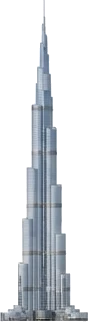 Burj Khalifa828 m (2,717 ft)Mount Everest8,849 m (29,032 ft)
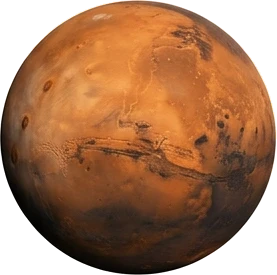 Planet Mars6,779 km · 3.72 m/s²
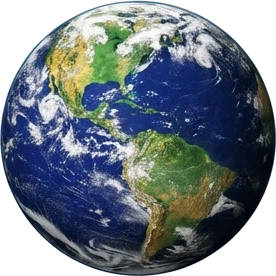 Planet Earth12,742 km · 9.81 m/s²
What Standing on Olympus Mons Actually Looks Like
Three geometric surprises from NASA's Mars Reconnaissance Orbiter flip how most people picture the Solar System's largest volcano:
- You Couldn't See the Summit From the Base—Because Mars Curves Away First: Even though Olympus Mons punches above
95%of Mars's thin carbon-dioxide atmosphere (summit pressure drops to72 pascals—barely0.07%of Earth sea-level pressure, practically space vacuum!), its624-kilometerwidth gives the main shield an average slope of just5 degrees(a wheelchair-ramp grade!). However, the volcano's outer perimeter ends in a sheer6-to-8-kilometer-tall ring cliff (basal scarp) nearly as high as Mount Everest all by itself! - A Summit Caldera Big Enough to Swallow Los Angeles or London: Perched at the
21.9 kmsummit sits a nested6-pitcollapse caldera complex measuring85 km × 60 kmwide and3.2 kmdeep—wide enough to hold3.5Manhattan islands end-to-end. - Why Smaller Mars (
6,779 km) Beat Bigger Earth (12,742 km): On Earth (compare Mars vs. Earth in 3D ↗), the Pacific Plate drifts northwest at7–10 cm/yearover the Hawaiian mantle plume, conveyor-belting magma into a6,000 kmchain of islands instead of one giant mountain. Because Mars cooled early into a single stagnant lithospheric lid with38%of Earth's gravity (3.72 m/s²), its Tharsis hotspot erupted basalt onto the exact same spot for over2 billionyears without buckling the crust! Test your planetary intuition now in Planet Size Comparison Game.
Sources & Primary References
- NASA Goddard Space Flight Center — Mars Planetary Fact Sheet
- NASA Science — Mars Facts & Olympus Mons Overview
- NASA Science — Dawn Mission at Asteroid 4 Vesta (Rheasilvia Basin)
- U.S. Geological Survey (USGS) — Mauna Kea Volcano Profile
- U.S. Geological Survey (USGS) — Hawaiian Volcano Observatory
- NOAA National Ocean Service — What Is the Highest Point on Earth?