Textbook diagrams of the Solar System almost always draw planets nearly touching one another at similar sizes so every world stays visible on a single page. That convenience erases the true sun vs earth size ratio—leaving most readers shocked when they see Earth (12,742 km) rendered as a tiny blue marble beside Jupiter (139,820 km) and The Sun (1,392,700 km) in Planet Size Comparison Game.
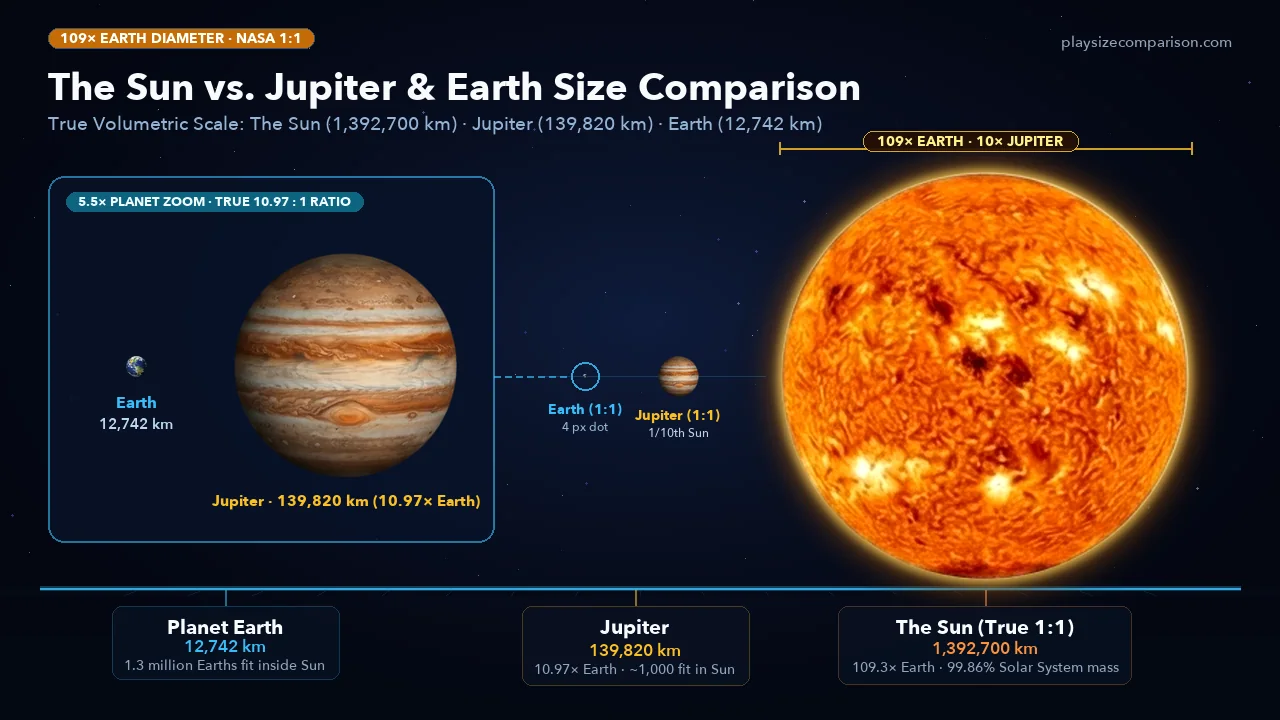
All figures below follow the official volumetric mean diameters published in the NASA Goddard Planetary Fact Sheets. Click any Launch 1:1 in 3D link to inspect that exact cosmic pair live in your browser!
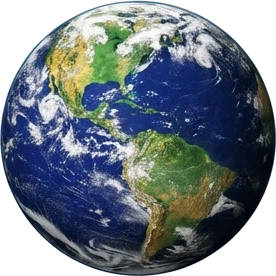 Planet Earth12,742 km
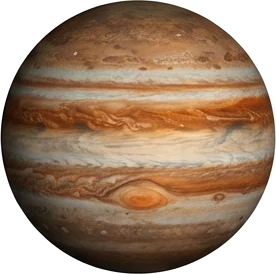 Planet Jupiter139,820 kmPlanet Jupiter139,820 km
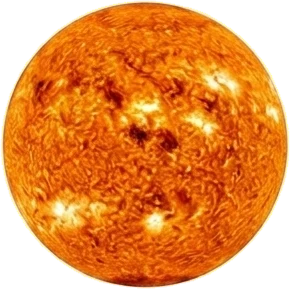 The Sun1,392,700 km
Verified NASA Diameter & Volume Table: Moon to Sun
| Solar System World | Volumetric Mean Diameter | Width vs. Earth (12,742 km) |
Volume vs. Earth (r³) |
Live 1:1 3D Viewer |
|---|---|---|---|---|
| Earth's Moon | 3,474.8 km | 0.273× (~1/4 width) | 0.020× (50 Moons = 1 Earth) | Moon vs. Earth in 3D ↗ |
| Ganymede (Jupiter Moon) | 5,268.2 km | 0.413× (larger than Mercury!) | 0.070× | Ganymede vs. Earth ↗ |
| Planet Earth | 12,742 km | 1.00× baseline | 1.00× baseline | Earth vs. Jupiter ↗ |
| Saturn (Main A–C Rings) | 282,000 km (116,460 km globe) | 22.1× ring span (9.14× globe) | 764 Earths (globe) | Earth vs. Saturn Rings ↗ |
| Planet Jupiter | 139,820 km | 10.97× Earths wide | 1,321 Earths inside | Jupiter vs. Sun in 3D ↗ |
| The Sun (G2V Star) | 1,392,700 km | 109.3× Earths wide | ~1,300,000 Earths inside | Earth vs. Sun in 3D ↗ |
| Sirius A (Brightest Night Star) | 2,380,000 km | 186.8× Earths (1.71× Sun) | ~6.5 million Earths | Sun vs. Sirius A in 3D ↗ |
| Arcturus (Red Giant Star) | 35,400,000 km | 2,778× Earths (25.4× Sun) | ~16,400 Suns inside | Sun vs. Arcturus in 3D ↗ |
Beyond Our Sun: How Bright Night Stars & Red Giants Compare
Our Sun dwarfs every planet in the Solar System, yet across the Milky Way it is a modest main-sequence star. Step one tier higher in our 1:1 Compare Tool to see Sirius A (the brightest star in Earth's night sky, 1.71× the Sun's width) and orange-red giant Arcturus (25.4× the Sun's diameter):
The Sun1.39M km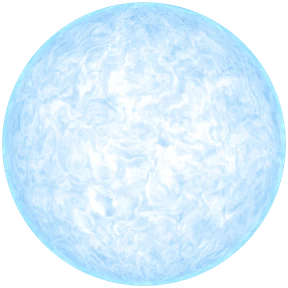 Sirius A2.38M kmThe Sun1.39M km
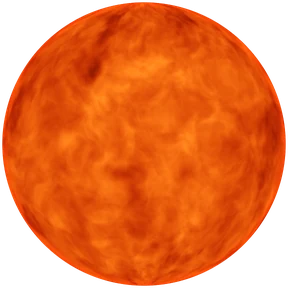 Arcturus (Red Giant)35.4M km
The Rule of Tens: Earth → Jupiter → Sun
Here is the cleanest mental shortcut in astronomy for any jupiter vs earth size or sun vs earth size round:
- Diameter scales by ~10× per step: Roughly 11 Earths fit side-by-side across Jupiter's equator (
10.97×), and roughly 10 Jupiters fit side-by-side across the Sun's equator (9.96×)—giving11 × 10 ≈ 109 Earthsacross the Sun! - Volume scales by ~1,000× per step (
10³): Because three-dimensional volume grows as the cube of linear diameter, stepping up 10× in width multiplies interior volume by 1,000×—so ~1,321 Earths fit inside Jupiter, and ~1,000 Jupiters (~1.3 million Earths) fit inside the Sun!
Mass, Density, Great Red Spot & Walking Scale Model
Size is only half the planetary story; density and orbital emptiness complete the physical picture recorded by NASA Solar System Exploration:
- 99.86% of All Solar System Mass: Even though the Sun's mean density (1.408 g/cm³, mostly hydrogen and helium plasma) is barely a quarter of rocky Earth's bulk density (5.514 g/cm³), its
1,300,000×volume advantage gives the Sun 332,946 Earth masses—leaving just 0.14% of total Solar System mass for all eight planets, moons, asteroids, and Kuiper Belt objects combined (with Jupiter alone holding over two-thirds of that planetary remainder at 317.8 Earth masses). - Jupiter's Great Red Spot vs. Whole Rocky Worlds: Observed by NASA's Juno spacecraft, Jupiter's anticyclonic Great Red Spot spans roughly 16,350 km east-to-west—still 1.28 times wider than the entire Planet Earth, even after gradually contracting over the past century! Meanwhile, Jupiter's largest moon Ganymede (5,268 km) and Saturn's hazy moon Titan (5,149.5 km) both exceed the planet Mercury (4,879.4 km) in physical diameter, though iron-rich Mercury carries more than twice their mass.
- Playground Scale-Walk Calibration (
1 : 10,000,000,000): Shrink the Sun down to a 13.9-centimeter grapefruit at one end of a school field. On that exact scale, Earth shrinks to a 1.27-millimeter coarse sand grain orbiting 14.96 meters (49 feet) away (1 AU = 149.6 million km, or8 minutes 20 secondsof light travel), while Jupiter becomes a 1.4-centimeter glass marble orbiting 77.8 meters downfield—revealing why textbook illustrations can never draw planet diameters and orbital distances to the same scale simultaneously!
Test your cosmic calibration right now in Planet Size Comparison Game or try unassisted order-of-magnitude rounds in Fermi Estimation Game.
Sources & Primary References
- NASA Goddard Space Flight Center — Planetary Fact Sheets Index
- NASA Goddard Space Flight Center — Sun Fact Sheet
- NASA Goddard Space Flight Center — Earth Fact Sheet
- NASA Goddard Space Flight Center — Jupiter Fact Sheet
- NASA Goddard Space Flight Center — Saturn Fact Sheet
- NASA Science — Solar System Exploration Overview